

Home / Farmland Habitat
As the UK navigates the transition away from EU subsidies, the agricultural sector faces a shift towards a ‘public money for public good’ approach. Farmers and land managers seeking government support are encouraged to integrate environmental actions into their operations. This aligns with the broader goal of balancing nature, climate, biodiversity, and food production.
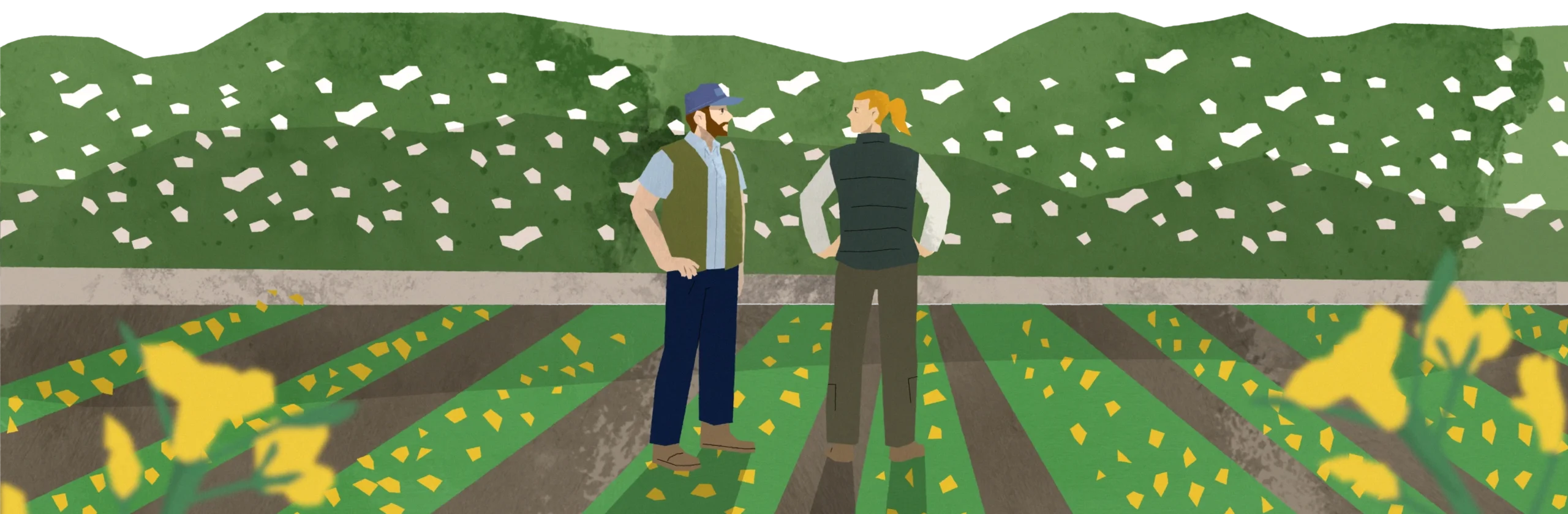
East Yorkshire, with its rich agricultural heritage and diverse habitats, is well-positioned to lead this transition. The county’s vast farmland and commitment to environmental stewardship offer a strong foundation for restoring and safeguarding the natural environment. Farming and farmland are the foundations of the area’s rural heritage and East Yorkshire is a nationally important region for food production. Farmers’ understanding of existing nature recovery efforts and their ability to identify opportunities for improvement are crucial to the success of this transition and local nature recovery. By connecting habitat parcels using buffers, hedgerows, and the region’s networks of drains; minimizing soil disturbance; and creating new habitats on marginal land, farmers can benefit both the environment and their bottom line. Government subsidies, BNG, and other green initiatives can support these efforts. The proposed strategy demonstrates that food production and nature restoration can co-exist and benefit one another. By grounding environmental enhancements in the realities of managing a productive landscape, we can create a sustainable and enjoyable environment for all.

Farmland birds (Corn Bunting, Skylark, Yellowhammer, Grey Partridge, Linnet, Tree Sparrow), wildfowl and wading birds (e.g. Wigeon, Teal, Ruff, Whimbrel, Goosander, Lapwing, Curlew), Greater Water Parsnip, Water Vole, Brown Hare, amphibians, and Barn Owl.
Arable field margins, hedgerows, scrub, drains, ditches, species-rich grassland, wet grassland, ponds, and scrapes.
Carbon storage, water storage, improved water quality, flood alleviation, and pollination.
To support farmers and land managers thinking of applying for the Sustainable Farming Incentive (SFI26) and/or Countryside Stewardship Higher Tier (CSHT), we have produced resources aligning the Priorities and Measures (actions) of the Hull and East Yorkshire LNRS with SFI26 and CSHT actions which could contribute to their delivery.
Molescroft Farm on the edge of Beverley has been farming regeneratively for a number of years and seen a remarkable improvement in soil health in that time. Minimal cultivations, cover and companion cropping, and returning grass leys to the rotation have helped the soil life and organic matter levels which is essential to soil health. The farm has recently stopped using insecticide on all but legume crops and seen an increase in butterfly numbers.
This winter, they have only planted very low input varieties of wheat which means they will be halving their fungicide use next spring which will hopefully also help soil health. Molescroft Farm hope to continue improving the soil to allow them to carry on producing affordable food alongside locking up carbon from the atmosphere and helping to slow down climate change. They hope to benefit from selling carbon credits alongside biodiversity gain credits once their carbon use is low enough.
The HEY LNRS will be a useful tool for supporting businesses like Molescroft Farm in generating biodiversity credits, helping local farmers and landowners identify eligible areas for biodiversity uplift.
Carbon sequestration is a co-benefit of many of the priorities and measures within the HEY LNRS, which can in turn unlock green finance mechanisms such as carbon credits.

Cows at Skidby, Andrew Faichney